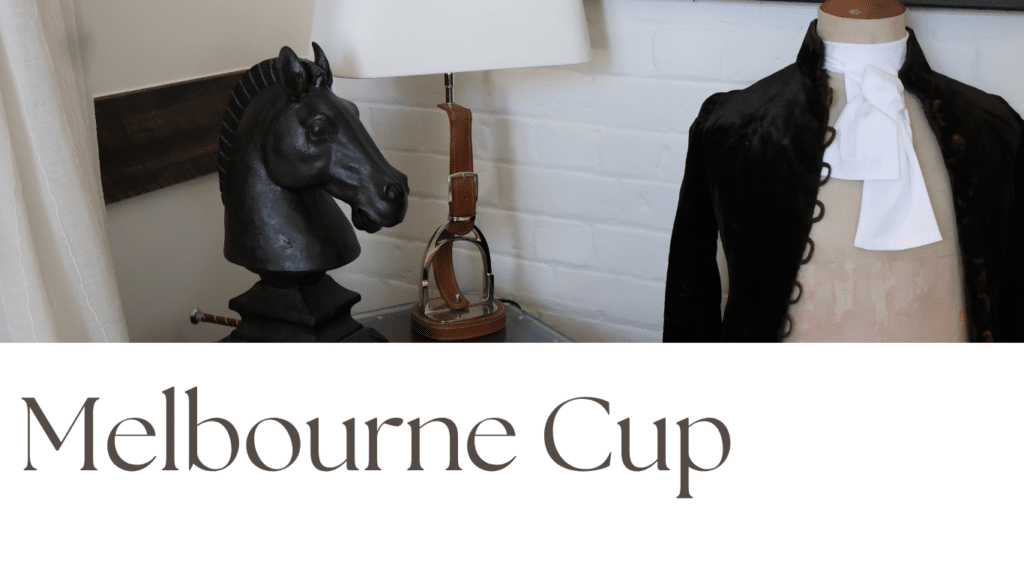
As the excitement of Melbourne Cup season returns, it’s worth remembering that one of Australia’s most remarkable racing stories began far from Flemington, right here at Calstock Estate in Tasmania’s Meander Valley.
Long before the Melbourne Cup became “the race that stops a nation”, Calstock Estate had already secured its place in Australian racing history. Under the ownership of the Field family, the estate developed a reputation for breeding outstanding thoroughbreds, producing not one but two consecutive Melbourne Cup winners: Malua in 1884 and Sheet Anchor in 1885.
A Legacy Born in the Stables
When John Field acquired Calstock in 1853, the estate became a thriving agricultural enterprise and an important centre for thoroughbred breeding. During the Field family’s stewardship, horses raised on these grounds would go on to capture the imagination of racing enthusiasts across Australia.
Today, visitors stroll through magnificent gardens and stay within beautifully restored buildings, but more than 140 years ago, the estate’s stables were home to some of the most celebrated racehorses of the nineteenth century.
Malua: The Horse That Could Do Everything
Few horses in Australian racing history have matched the extraordinary achievements of Malua, bred at Calstock and foaled in 1879. Malua remains famous not only for winning the 1884 Melbourne Cup, but for his remarkable versatility across an astonishing range of distances.
Throughout his racing career, Malua won races from sprint distances of approximately 1,100 metres through to gruelling endurance contests exceeding 5,000 metres. Racing historians still regard him as one of the most versatile thoroughbreds ever seen on an Australian track.
In 1884, Malua enjoyed a season that racing dreams are made of. He claimed the prestigious Newmarket Handicap, Oakleigh Plate and Adelaide Cup before arriving at Flemington for the Melbourne Cup. Carrying a substantial weight, he fought off strong competition to secure victory and etch his name into Australian sporting folklore.
His achievements didn’t end there. Malua later won the Australian Cup and even transitioned successfully to hurdling, winning the Grand National Hurdle before retiring to stud. In recognition of his remarkable career, he was inducted into the Australian Racing Hall of Fame in 2003.
Sheet Anchor Follows in His Hoofprints
If producing one Melbourne Cup winner wasn’t enough, Calstock achieved something even more extraordinary.
Just one year after Malua’s triumph, another horse connected to the estate, Sheet Anchor, captured the 1885 Melbourne Cup, giving Calstock the distinction of producing back-to-back Cup winners.
Sheet Anchor’s victory came at the 25th running of the Melbourne Cup on 3 November 1885. Starting at long odds, he stormed home to claim Australia’s most prestigious race in front of a crowd estimated at around 85,000 spectators.
To this day, few breeding operations can boast consecutive Melbourne Cup winners. For a Tasmanian estate in the 1880s, the achievement was extraordinary.
A Story That Lives On
The connection between Calstock Estate and these legendary racehorses remains an important chapter in Tasmania’s history. In Deloraine, a memorial honours Malua’s achievements, celebrating a horse whose story began on the fertile lands surrounding the estate.
Today, guests staying at Calstock can enjoy the tranquillity of the historic property while knowing they are walking through a place that helped shape Australian racing history. The original stables, now lovingly restored and a space for guests to stay and enjoy, stand as a reminder of a remarkable era when champions were raised on these grounds.
As Melbourne Cup Day approaches, we invite you to pause for a moment and remember that one of Australia’s greatest racing stories didn’t begin at Flemington.
It began at Calstock.